America at 250: The Psychology of What America Means to Us
On the 250th anniversary, place attachment theory offers a way to see two kinds of Americans clearly, and the debt one owes the other.

Two hundred and fifty years is long enough for a nation to become invisible to the people who live inside it. We stop seeing the walls because we have never known a world without them. We stop appreciating the place because we have never had to stand on anything else. This is the strange privilege of belonging somewhere long enough that belonging itself disappears from view.
Attachment science gives us language for what is happening here, and it applies to places as surely as it applies to people. In Bowlby’s original framework, a secure attachment figure serves two functions at once. It is a safe haven we turn to for proximity — somewhere to return to when the world becomes frightening, when resources run short, when the threat is real or only feels real. And it is a secure base; in other words, the platform stable enough that a person can leave it, explore from it, take risks from it, and build a life that reaches well beyond its borders, all because the base itself is not in question.
These are not the same thing, and the distinction matters more than we usually admit.
Safe Haven
A refuge sought under threat. Proximity-seeking behavior activated by fear, scarcity, or instability. The condition of the still-arriving.
Secure Base
A stable platform for exploration. Confidence to launch outward because the foundation is no longer in question. The condition of the arrived.
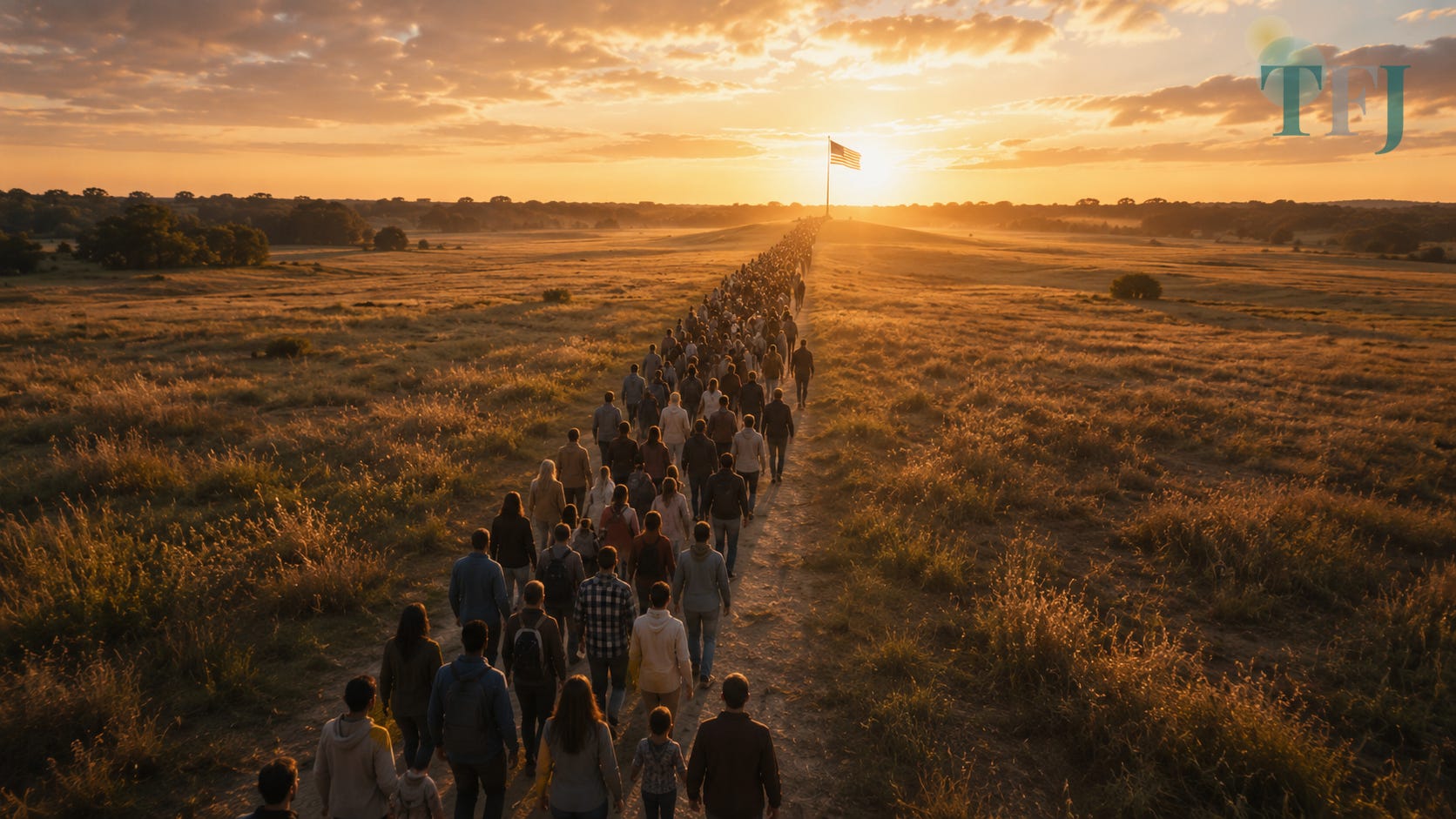
Two Unique Experiences in One Country
For a great many people currently walking American soil, this country is still functioning as a safe haven. They arrived, or their parents arrived, or they are still arriving, because somewhere else was not safe, either economically, politically, physically. They are in the anxious, effortful, hopeful posture of proximity-seeking: working toward their papers, toward a diploma, toward a paycheck that doesn’t disappear before the rent is due. This is the American Dream in its most literal form.
For others, the secure base has already been established. The dream, or some version of it, has been achieved. Citizenship is settled. Opportunity is assumed rather than pursued. And from that stability, people launch outward towards building companies that operate on every continent, doing novel things that shape industries worldwide, sending soldiers and diplomats and missionaries and entrepreneurs into every corner of the globe. America does not simply house its people. It sends them out to shape the world, and it receives them back when the venture is over. That is what a secure base does.
Attachment does not ask how you first approached the figure who became secure. It only asks whether the bond holds. Born here or sworn in here, the outcome we are all reaching for is the same.
The trouble is that these two groups often fail to recognize each other, and worse, fail to recognize themselves. Those still seeking safe haven can feel invisible to a country that talks mostly about its power projected outward. And those already operating from secure base status can forget entirely that the base was ever precarious. They mistake stability for a birthright rather than an achievement, theirs or their parents’ or their grandparents’ and once something is mistaken for a birthright, gratitude becomes optional.
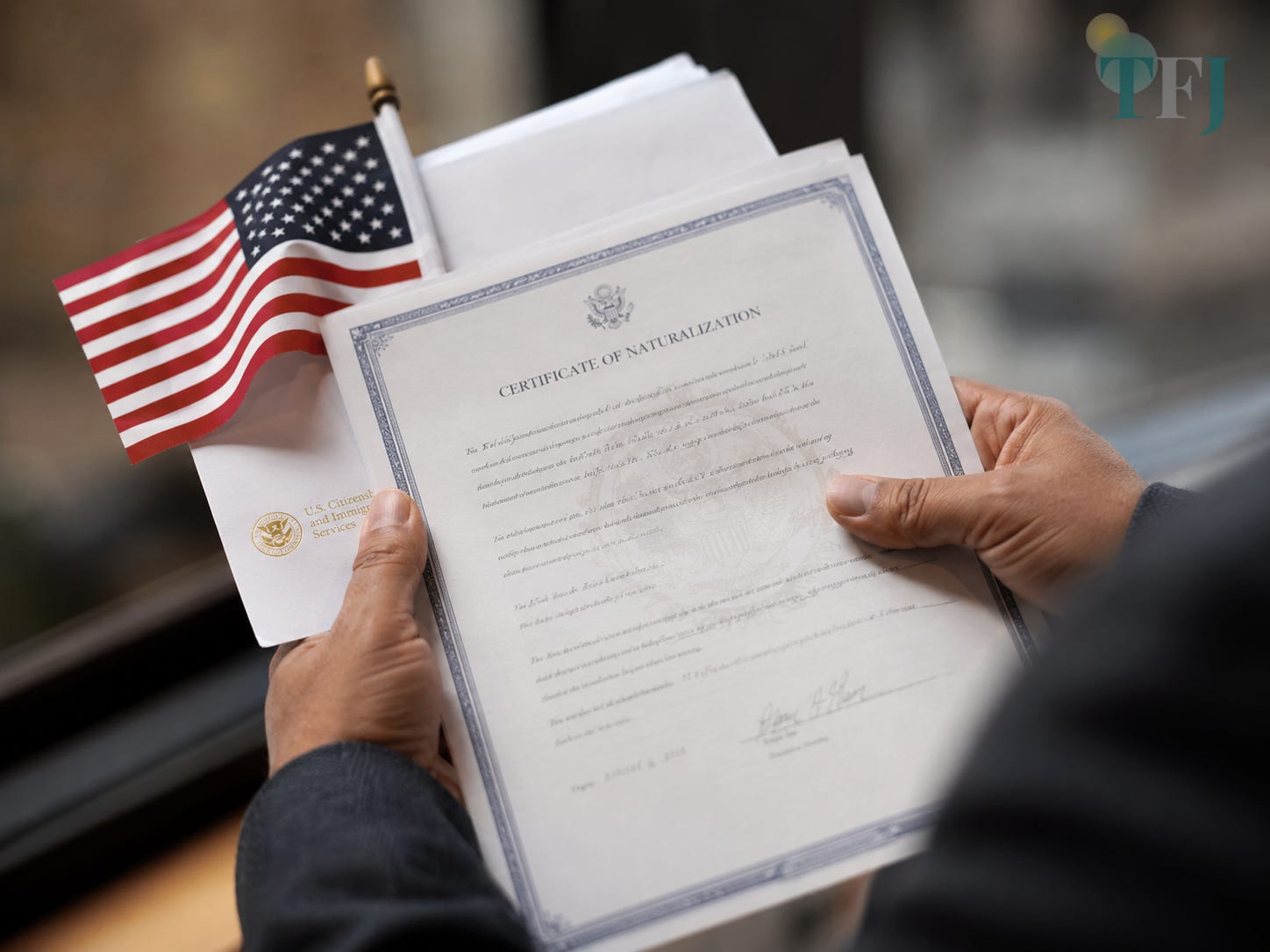
The Experience of Many American Families
Many American families did not arrive at an American secure base through this soil at birth. They arrived through proximity-seeking of their own, across different countries before this one, until — perhaps — naturalization made what had been a safe haven into something closer to a base they could build from. I say this not to distinguish this kind of Americans from those born on this land, but because the theory insists there is no meaningful difference in the end. Attachment does not ask how you first approached the figure or object who became secure. It only asks whether the bond is reliable.
Born here or sworn in here, the outcome we are all reaching for is the same: a country stable enough to stop bracing against, and generous enough to launch others from.
This should also convict us as a nation
If you are already living from secure base status, the temptation is to forget what the safe haven years cost. You forget the paperwork, the waiting, the years spent proving you belonged before anyone would let you build. And forgetting produces a particular kind of blindness: you stop seeing the neighbor still in the safe haven phase, still anxious, still seeking, still working toward the stability you now take for granted.
Flourishing research is consistent on this point across every domain we study: security that does not extend itself to others tends to calcify into something closer to entitlement than gratitude. The people who flourish longest are the ones who remember what it took to arrive, and who use their stability to pull someone else up rather than to pull the ladder in behind them.

Don’t Let Change Become Separation Anxiety
There is a second temptation worth naming directly. Demographic change, migration, globalization, the shifting face of who counts as American — these are not disruptors of the attachment. Immigration and cultural change can feel destabilizing if the bond to this country was always more fragile than we admitted, but a country this size was never going to hold still for two hundred fifty years, and change is not the same thing as abandonment.
When we treat every new arrival or every political shift as a threat to the base itself, we manufacture a kind of separation anxiety with our own home, and separation anxiety produces defensiveness, not security.
A secure base does not need to be defended against every newcomer. It needs to be extended to them.

So this July 4th, two things can be true without canceling each other out. We can acknowledge, honestly, that America has been an extraordinary secure base for those who have reached it; thus stable enough to launch from, generous enough to absorb the risk of failure and let people try again. And we can look at the neighbor still working toward that stability, still in the safe haven phase, still proving and waiting and hoping, and remember that we were there too, or someone in our storyline was.
Two hundred fifty years old, and still capable of being both refuge and platform, if we let it be. I think that is worth celebrating. It is also worth the work of making sure it stays true for the next person walking through the door.