

America Is Dysregulated, Not Divided
A motivational science perspective
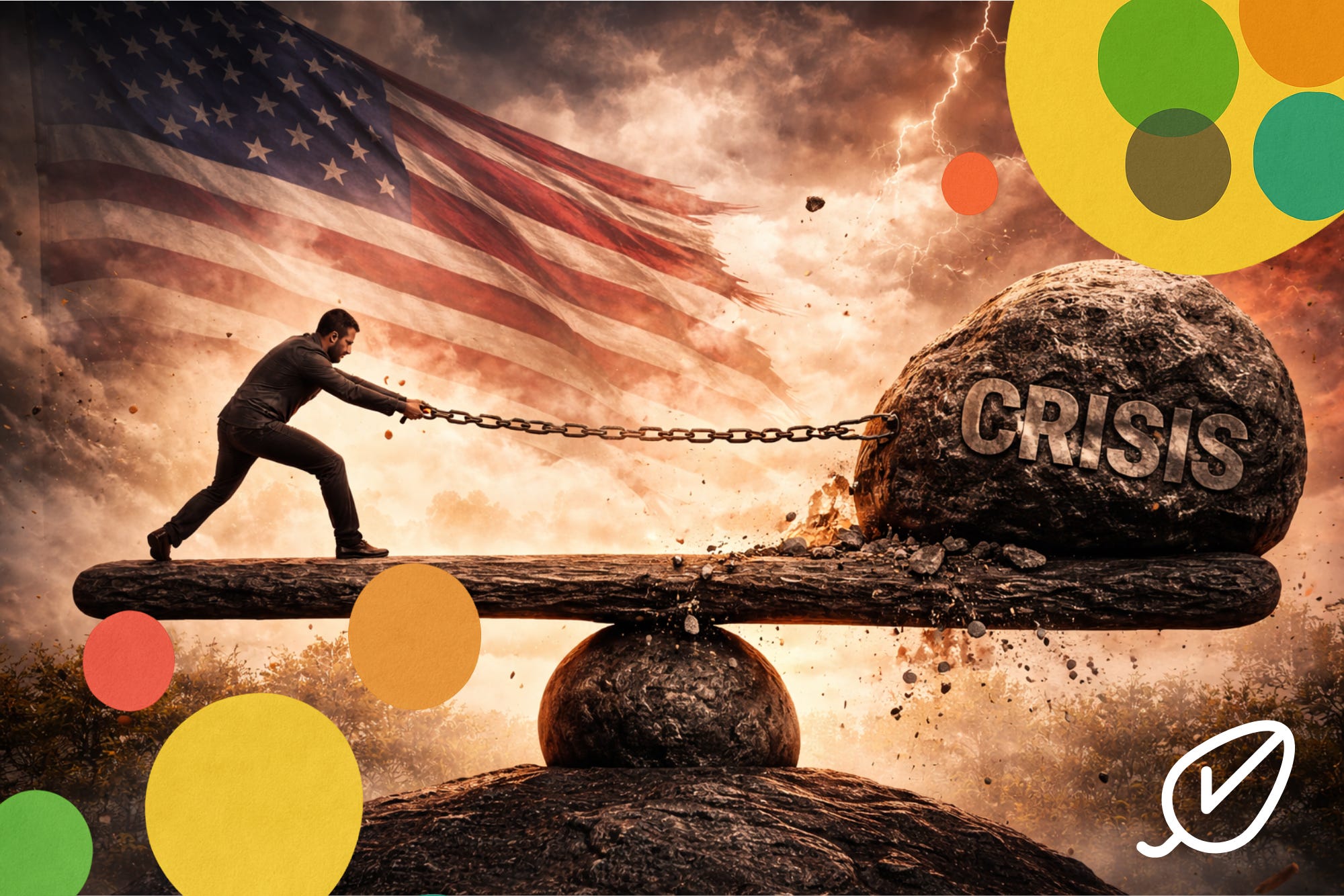
Division is the story we tell because it feels intelligible. It gives us sides, causes, villains, and talking points. Dysregulation is harder to face. It does not flatter anyone. It implicates environments, habits, and institutions rather than just beliefs. It suggests that something is wrong beneath the arguments, beneath the slogans, beneath the certainty -- at least, this is what motivational science teaches us.
We are not arguing from stable ground. We are arguing from bodies and minds that have been pushed beyond their capacity to settle.
In psychology, regulation refers to the ability of a system to maintain balance while responding to change. One of the grand theories of motivational science, i.e., drive theory, emphasizes this phenomenon. When regulation works, emotion rises and falls in proportion to need or psychological drive. Motivation activates and then resolves itself in that process, returning one to its optimal condition. In other words, action leads somewhere and eventually stops. When regulation fails, however, intensity replaces a shared sense of direction and leadership, leading to a situation in which output replaces purpose. This simply means that people do not simply act because their action helps them, but because stopping actually feels worse.
That is where we are.
Public life now operates in a constant state of internal excess. Threat cues never shut off through our media feeds. Our attention never rests. It is reasonable to conclude that our moral urgency has never resolved into satisfaction due to this internal excess. We move from crisis to crisis -- newscycle after newscycle -- without the biological or psychological space to register relief. Unfortunately, this cycle of dysregulation produces a state of reactivity, wherein our extremes feel stabilizing. This is the dysregulated system.
In such a climate, a sensible state of certainty can become soothing whereas outrage could be a sign of organizing the dysregulated system. Absolutism provides structure when nuance feels unbearable in a state of dysregulation. This is why moderate voices today sound weak and extreme voices sound strong, regardless of their content. Strength, in a dysregulated state, is not necessarily about truth but found in relief.
And unfortunately, we mistake this for conviction, hence why the ‘disgustingly’ loudest creators have the largest following in a dysregulated system. It is regulation seeking equilibrium.
Much of what we call polarization today is actually the visible behavior of systems trying to bring internal states back into range. When anxiety runs too high, the mind seeks strong narratives that compress complexity. When meaning runs too low, it seeks identity and belonging wherever they are immediately available (left, right, center politics). When control feels absent, it clings to positions that promise coherence, even if that coherence is brittle.
I am not trying to make a moral excuse for our excess as a society. As a psychological scientist, I am compelled to think of the world around me through empirically testable frameworks that bring clarity and diagnosis to complex societal issues.
What I am trying to say is that the homeostatic mechanisms that normally guide human behavior rely on a feedback loop. When our needs (psychology, biological) are met, signals quiet down. Satisfaction registers. Action stops. In modern American life, those feedback loops rarely close. Work does not end. Consumption does not satisfy us. Our news cycle does not resolve. Our outrage at politics does not repair this state of dysregulation. We have built environments that activate drive without providing satiety.
And as a result, motivation becomes compulsive. People keep going at it not because the goal is clear, but because stopping would expose the fact that nothing has been resolved. Little wonder why our elected and non-elected government officials have to respond to every buzz. Rest now feels unsafe because the system expects another alarm. It is looking more and more like silence feels irresponsible when threat has become the default signal.
This is why calls for calm fall flat. Calm is not a decision. It is an outcome of regulation. You cannot instruct a nervous system into safety. You have to give it conditions that allow safety to emerge.
Our institutions largely do the opposite.
Media platforms reward political intensity and toxicity because they keep attention. Political structures benefit from such perpetual mobilization because it sustains their power. In academia, productivity is highly regarded without closure. None of these systems are designed to allow resolution. They are designed to keep output high.
In such an environment, dysregulation is not a failure of character but a predictable response because of its default nature. And as a result, we then layer moral language on top of our physiological strain. We accuse each other of bad faith. We pathologize disagreement. We confuse exhaustion with evil. This escalates the very states we claim to oppose.
A regulated society can disagree without collapsing. A dysregulated one cannot.
This is why the most dangerous conversations right now are not about policy details or ideological alignment. They are about whether we can restore conditions under which people can think, feel, and choose without constant internal threat.
Regulation precedes deliberation. Until our internal states settle, no amount of information will persuade. No argument will land cleanly. No compromise will feel safe. People do not listen when their systems are overloaded. They defend. They simplify. They attack.
What looks like moral rigidity is often emotional overload.
This reframing of our current system does not absolve responsibility. My goal in writing this article theoretically, rather than with practical examples, is to try to relocate responsibility and blame because it is neither the fault of the left, right, or center. Society is reflecting our collective internal state of dysregulation. Responsibility should shift from winning arguments to repairing conditions of people who inhabit this beautiful place we call home. From demanding better behavior to asking what states that behavior is serving. From endless debate to the harder work of restoring closure, rest, and meaning. You could say that this is the key thesis of our collective finding from the Global Flourishing Study, showing a stark decline in meaning and purpose in the West.
We have grown accustomed to seeing anger as engagement and exhaustion as commitment. Both are signs of our systems running past their limits.
A regulated system allows dissatisfaction to guide change and then to resolve. A dysregulated system traps dissatisfaction in endless motion. That is the difference between reform and perpetual crisis.
I do not think that America lacks values. Rather, it has a problem of recovery. For example, people need to recover from living as though rest is irresponsible, from organizing daily life around alerts and deadlines rather than shared meals and presence, and from responding to every social issue with speed instead of moral patience.
Until we can feel done with something, we will keep repeating it. Until satisfaction becomes possible again, motivation will remain frantic. There will continue to be an escalation of dysregulated action until our shared feedback loops close.
This is why calls for unity feel hollow. Unity is not an emotion. It is a condition that emerges when systems trust that equilibrium is possible. We do not need louder arguments. We need environments that allow regulation to return. That means fewer constant alarms. More silence with purpose. Fewer incentives for outrage. Upholding the rule of law. More spaces where action can actually complete.
I must caution, though, that these recommendations may not trend or excite. They will feel slow and insufficient to those addicted to intensity. But without regulation, no amount of agreement will hold us together.
America is not broken because it disagrees. It is strained because it cannot settle. And until we address that, division will remain the symptom we argue about while the condition intensifies underneath.
The work ahead is not choosing sides or pointing accusing fingers. We must collectively work toward restoring balance.
Balance. Equaliburium. Homeostasis. These are the vocabularies of restoration.