

Christian Flourishing Index
Measuring Abundant Life through a Christian Worldview
This is a summary of my talk last month at the European Conference on Flourishing and the Church, Salzburg, Austria.
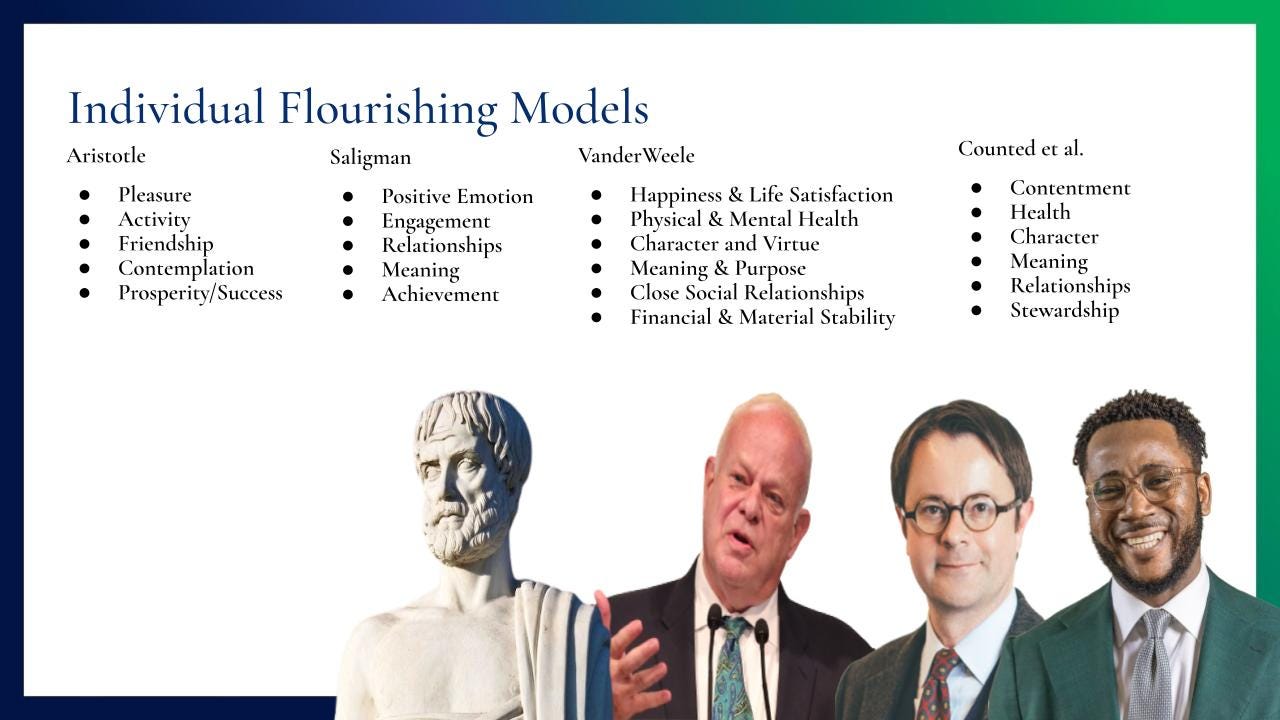
For centuries, scholars have asked what it means to flourish. Aristotle called it eudaimonia, which means a life of purpose and virtue directed toward the highest good. In recent times, positive psychologists have tried to answer the same question. Martin Seligman’s PERMA model, for example, focuses on positive emotion, engagement, relationships, meaning, and achievement. Harvard’s Human Flourishing Program, led by Tyler VanderWeele, adds dimensions like health, virtue, and financial stability. These ideas shape how we currently define a good life.
Yet for over two billion Christians, something essential is missing. These models describe how humans can thrive, but they do not explain how core values of the Christian faith (e.g., faith, hope, and love) transform the way Christians live. Flourishing in Christian life is not about the pursuit of secular ideals of a good life. It is about becoming whole in Christ. It is a life anchored in relationship with God that is marked by grace and often strengthened through struggle.
This conviction led to the creation of the Christian Flourishing Index (CFI) -- a new tool that begins with the Christian worldview and builds outward. The goal was simple: to measure what Christian flourishing looks like for those who follow Jesus (John 10:10).
The Etic Problem
Most scientific measures of wellbeing and flourishing use what researchers call an etic approach. This means they look from the outside, assuming that well-being can be defined the same way for everyone. The problem is that no measurement is neutral. Each one reflects a particular view of human life.
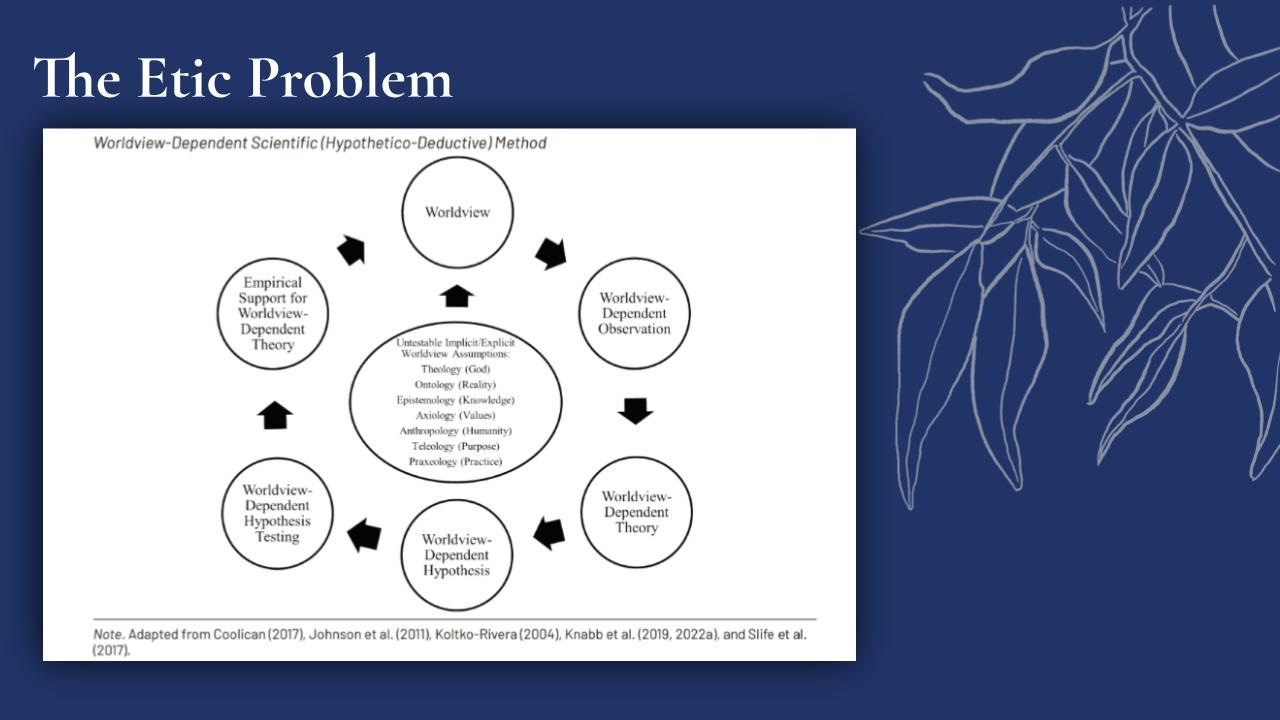
A question like “How satisfied are you with your life?” captures how happy someone feels, but not how content they are in God. A scale that measures financial security cannot capture the idea of stewardship (i.e., the idea of using what we have to serve others and honor God). Even questions about virtue often miss the heart of Christian character, which grows through humility and sacrificial love.
When researchers rely only on these outside categories, they risk misunderstanding Christian life. Faith, hope, and love do not fit easily into secular frameworks. Christians may appear “less happy” or “less successful” on paper, even while living well-fulfilled spiritual lives. For this reason, the CFI takes an emic approach -- one that begins inside the Christian story itself.
Two Emic Strategies
There are two main ways to build an emic framework. The first is what we might call the Christian Worldview Approach. It starts with how Christians see the world and draws its categories from theology. God is not an optional add-on but the center of reality. Scripture, creation, and revelation shape how knowledge is understood. Humans are made in God’s image, fallen yet redeemable. Purpose flows toward eternal communion with God. Values reflect divine love, holiness, and justice. And daily practice expresses faith through worship and service.
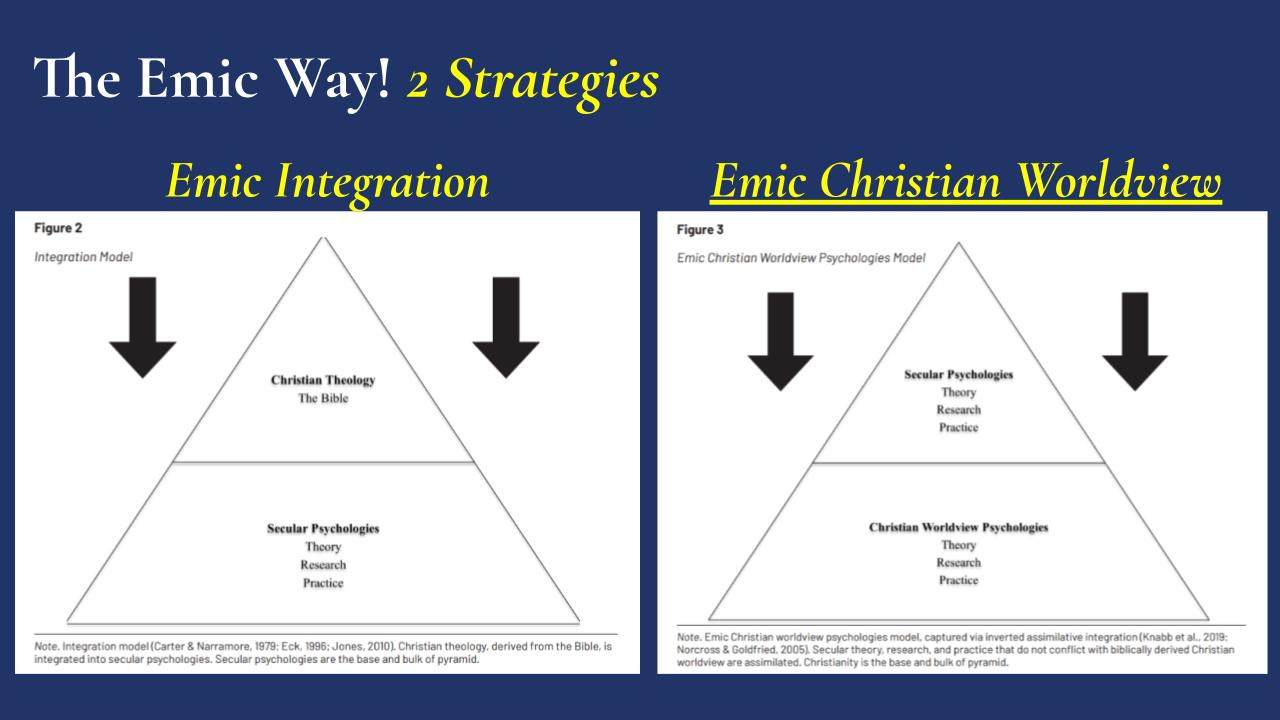
The second strategy is Emic Integration. This method keeps the scientific process but rewrites it through Christian language and goals. It respects universal measures like happiness, health, and meaning but reframes them around Christian ends. In other words, it speaks science in the language of faith.
The Christian Flourishing Index brings these two strategies together. It combines temporal secular measurement of flourishing (e.g., Vanderweele’s Secure Flourishing measure) with theological clarity. It builds bridges between the academy and the church, allowing researchers to study how Christians live and grow within their own sacred framework.
The Shape of Christian Flourishing
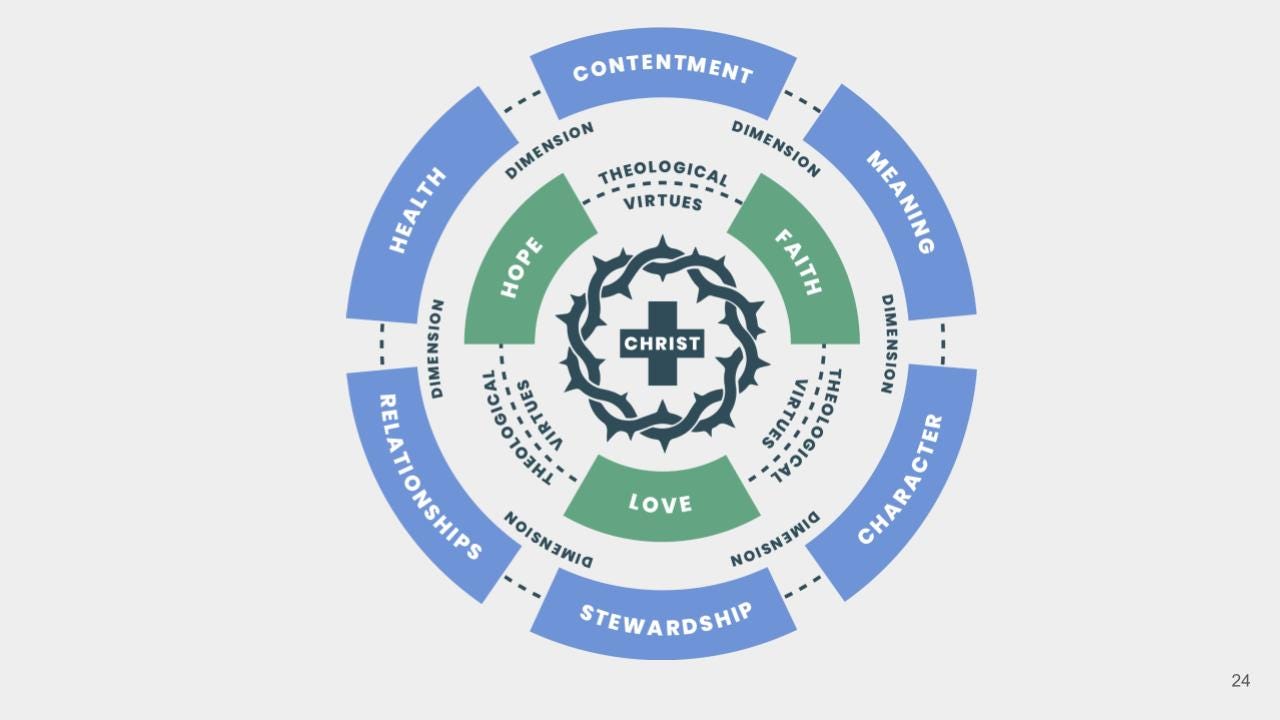
The CFI draws from familiar domains such as health, meaning, contentment, character, relationships, and stewardship, but fills them with Christian meaning. Each dimension connects daily life with faith:
Health -- caring for one’s body as a gift from God and trusting God’s faithfulness in suffering.
Meaning -- believing that God’s purpose holds even when it is not fully understood.
Contentment -- resting in God’s sufficiency rather than material comfort.
Character -- practicing faith, hope, and love in daily life.
Relationships -- loving others, forgiving freely, and seeking reconciliation.
Stewardship -- using our time, talents, and resources for God’s glory.
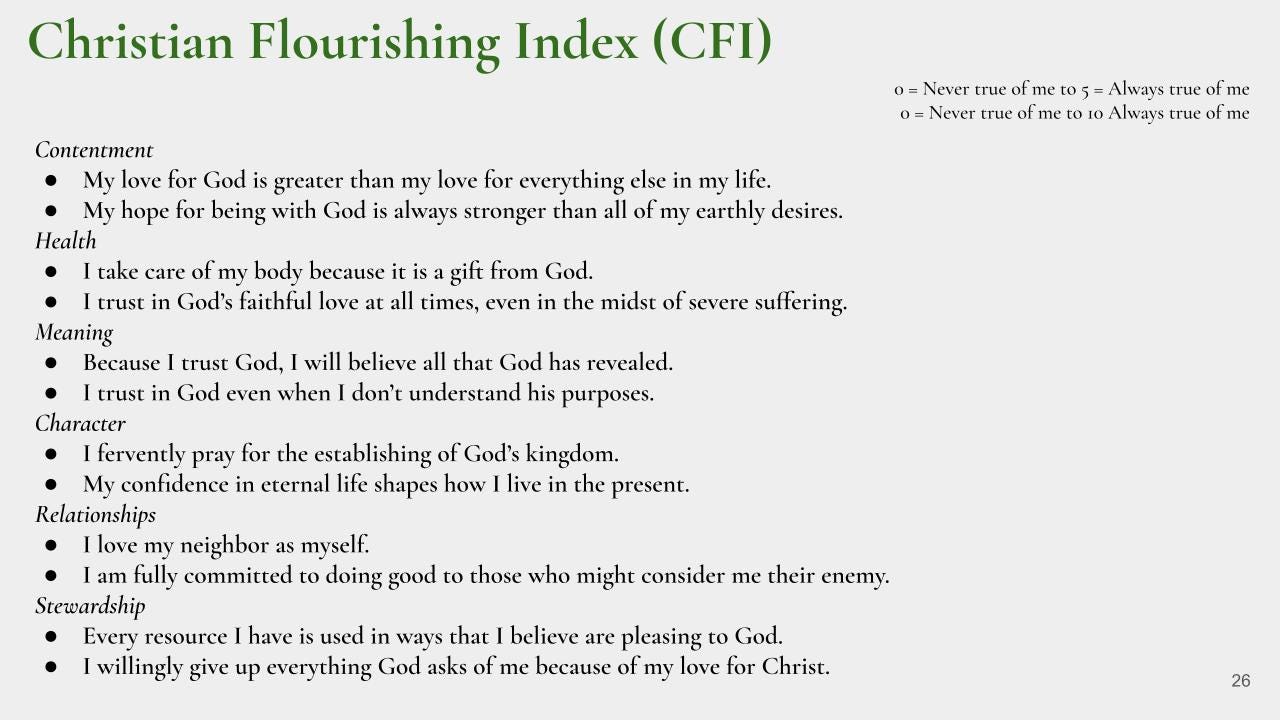
Each item in the scale speaks the language of faith. It helps believers recognize the source of their flourishing -- God. For example, under “Health,” one might affirm, “I take care of my body because it is a gift from God.” Under “Stewardship,” the respondent might reflect, “Every resource I have is used in ways that I believe are pleasing to God.” The CFI ultimately captures why Christians do what they do and not just what they do.
Theological Virtues at the Center
Faith, hope, and love form the heart of the CFI. They are not optional virtues but divine gifts that shape how Christians live. Faith anchors trust in God’s promises. Hope keeps the eyes on eternity. Love moves the heart toward service and sacrifice. These virtues make sense of the Christian paradox: joy in suffering, life through surrender, and gain through loss
This orientation distinguishes Christian flourishing from the secular pursuit of happiness. In the Christian narrative, flourishing is not a reward for success but a byproduct of surrender. It is the fruit of abiding in Christ, who alone defines what it means to live abundantly (John 10:10).
The Justification for the CFI
The Christian Flourishing Index rests on several clear reasons
First, it begins with a Christian worldview rather than borrowing a secular one. Christianity is not a small cultural system; it is the faith of a third of the world. It deserves to be studied on its own terms.
Second, it reveals how faith operates within secular environments. Many Christians live in societies shaped by modern, non-religious norms. The CFI helps show how believers integrate their faith into those contexts without losing their distinct identity.
Third, it reduces what might be called worldview blindness. Secular measures often ignore categories that matter most to Christians, e.g., trust in God, joy amid trials, or eternal purpose and perspective.
Fourth, it prevents “translation loss.” When Christian experiences are forced into secular language, their depth is flattened. The CFI keeps their theological meaning intact.
Fifth, it promotes faithful representation. It gives voice to Christian perspectives in global research, not to claim superiority but to bring honesty and balance. For this reason, the measure complements existing temporal flourishing measures and thus could be used comparatively.
Finally, it honors the same principle that guides cultural research everywhere: respect for indigenous frameworks. If psychologists value emic studies in every culture, they should also value one within the Christian tradition.
Added Value for Secular Contexts
The CFI is not only for churches or seminaries. It offers genuine value to secular research as well.
Comparability -- It works alongside universal measures like the Secure Flourishing Index, allowing meaningful comparisons between secular and faith-based samples.
Explanatory Depth -- It helps explain why Christians often report joy, peace, or resilience even during hardship. These are patterns that standard measures cannot easily interpret.
Cultural Reach -- It helps scholars understand how a third of the world’s population experiences well-being through their faith.
Scientific Transparency -- It reminds researchers that every measure carries a worldview, and that acknowledging this fact strengthens, rather than weakens, science.
CFI offers both universal and specific contours of flourishing in the Christian life, thus broadening the conversation about human flourishing. It helps the social sciences see the full picture of a flourishing life in Christ.
From the Inside Out
Flourishing in Christian life begins within the believer and moves outward. A transformed heart shapes a renewed congregation. A renewed congregation blesses its community. Faith, hope, and love become the roots of social good.
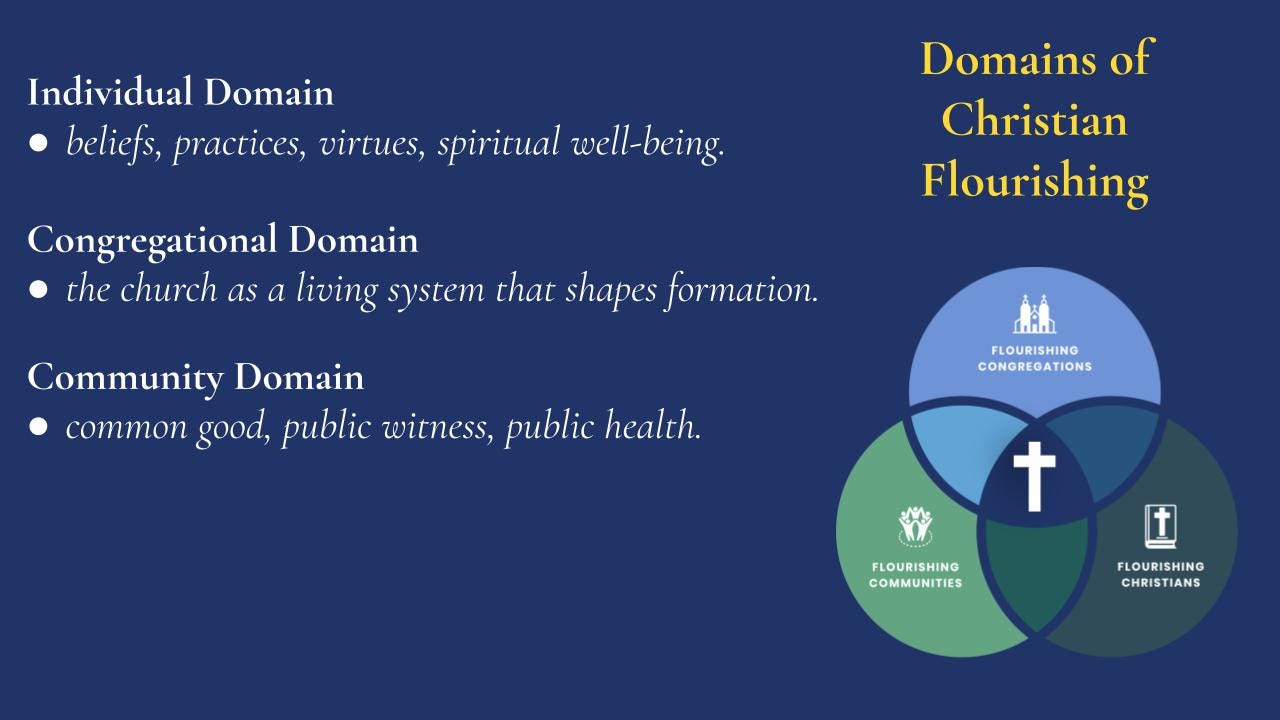
Behind this movement is a sending God, who calls His people to bring light and healing to the world. The Christian Flourishing Index helps us see that process more clearly. It connects theology with psychology, and faith with evidence, without losing the mystery at the center of Christian life.
To flourish as a Christian is not to avoid hardship but to find grace in it. It is to walk with God in the ordinary and the difficult, trusting that all of life points back to Him. That is the abundant life Jesus promised -- and the Christian Flourishing Index helps us understand, study, and live it in full.
Citations
Counted, V. (2025). An Introduction to the Science of Christian Flourishing: A Domain-Based Approach. Journal of Psychology and Christianity 44(1), 4-14
Counted, V., Long, K., Johnson, B., Lee, M.T., Worthington Jr., E., Fogleman, A., Johnson, E., Garzon, F., Hathaway, W.L., VanderWeele, T., (2025). The Individual Domain of Christian Flourishing: Conceptual Foundations and Measurement Template. Journal of Psychology and Christianity 44(1), 15-38
Counted, V. (TBD). Christian Flourishing and the Abundant Life: A Social Scientific Approach. Baylor University Press