

Christmas and the Fear of the Illegal Alien
Merry Christmas!!!
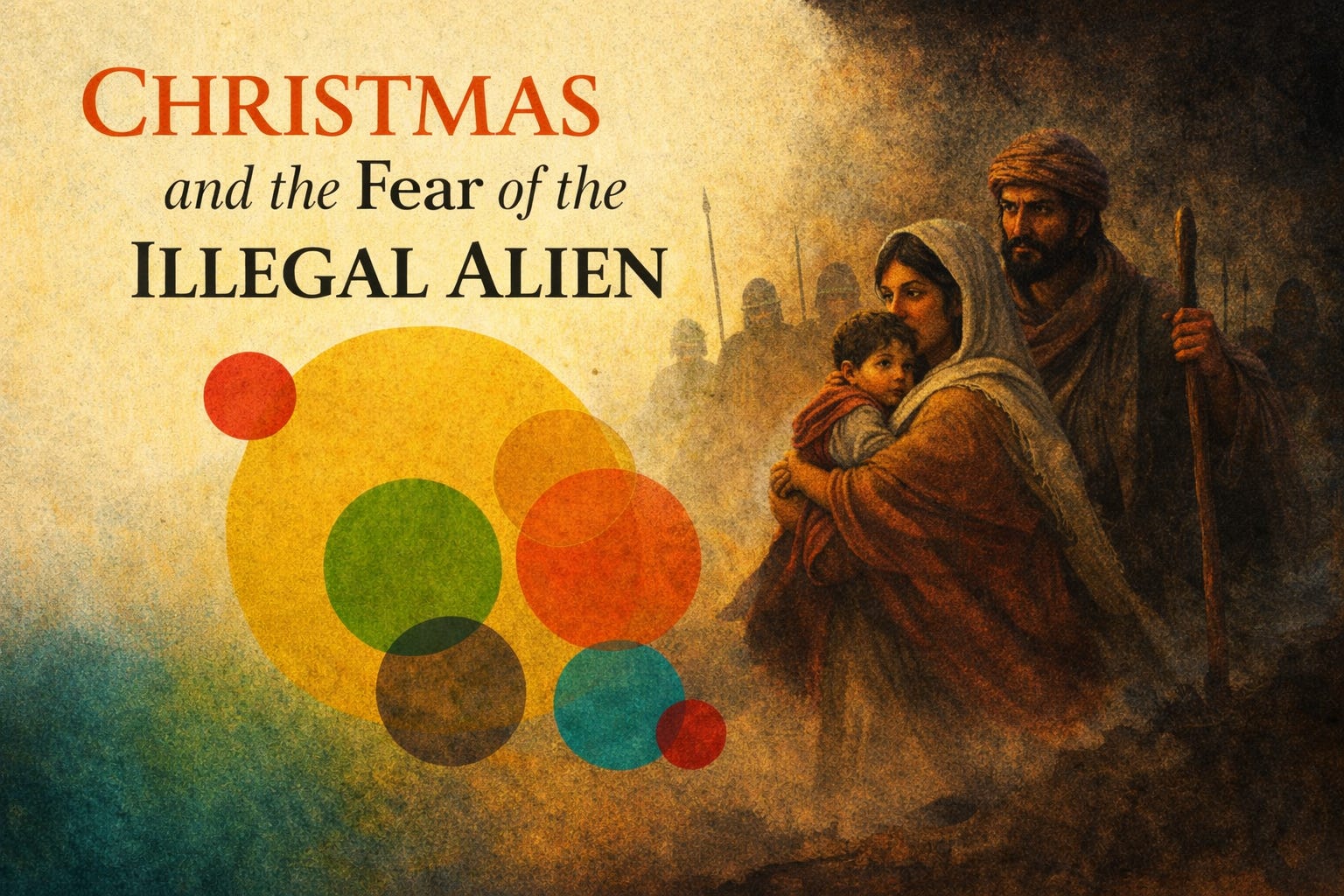
In case you forgot, Christmas tells a political story before it tells a sentimental one. It is not about Santa or the beautiful lights. Christmas begins with fear. It unfolds under an empire. It centers on a child whose existence threatened power before he ever spoke a word.
The birth of Jesus did not take place in a non-existent world. It happened in a real place. It occurred under the rule of the Roman Empire, a regime built on control, taxation, surveillance, and military force. Judea lived under occupation. Its people lacked sovereignty. Their lives depended on the goodwill of distant rulers and imperialists who feared unrest more than injustice.
Into this world came a child announced as king.
Herod did not hear this news as hope. It was a threat to his empire. Herod the Great ruled Judea by Roman permission. His power rested on loyalty to empire and suppression of threat from Judea. The idea that a foreign child could displace him triggered panic. This fear did not remain abstract. It turned violent. Herod ordered the slaughter of children that could fit the age range of the child king to secure his throne. Empires always act decisively when it feels exposed or threatened.
At the center of this threat stood a woman carrying a child. Mary had no legal protection under Roman law. She belonged to a conquered people living under imperial rule. She held no power, no citizenship, and no legal voice that could shield her child. In the logic of empire, her life and her son’s life were expendable. In such a system, some lives counted less, and hers counted least. By modern language, Jesus began life as an illegal alien from a colonized Judean state inside a Roman empire that did not recognize his claim to belong.
The danger escalated. Joseph received warning. The family fled. They crossed borders without permission. They entered another land without documents. They lived as undocumented immigrants in Egypt. This movement to Egypt was not by choice. It was a necessary survival. The holy family became refugees because the Roman empire left them no alternative.
This flight forms part of the Christmas story. Yet many prefer to ignore it and focus on trivial tales of Santa Claus. We decorate the scene of the Christmas story but remove the risk. We celebrate the child but forget the fear and the context in which he was born. We remember the manger but forget the escape to a foreign land.
Empires often construct stories about outsiders. These stories claim that foreigners threaten order, culture, and safety. They portray immigrants as invaders. They justify exclusion through fear. Rome followed this pattern. Herod embodied it as the ruler of Judea, reporting to Rome. Violence followed from it.
This pattern has not disappeared.
In the present moment, political rhetoric around the world echoes ancient fears. Immigrants receive labels that strip them of dignity. “Illegal alien” becomes one of the many examples and a moral judgment rather than a legal category. There is no longer a binary between “legal” and “illegal”. The slippery line has blurred; all are now the same nomenclature. “Undocumented migrant” or “immigrants” becomes a synonym for threat. This fear has replaced empathy for people created in the image of God. Power responds with bans and punishment.
This week the Christmas story confronts us again.
Jesus entered history as what modern systems would reject. He lived as a child without citizenship. He survived as part of a displaced family. He depended on hospitality rather than rights. If modern immigration systems governed his birth, he would face detention or deportation. Christmas forces us to reckon with that reality.
The comparison unsettles because it exposes continuity across time. Throughout history, we’ve seen how rulers secure authority by cultivating fear of the outsider. They present vulnerable foreigners as threats to social order. They convert public anxiety into permission for exclusion and force. The pattern repeats whenever power feels fragile and under siege.
Empires also recur in pattern, even when their forms change. Any dominant power with global reach, economic influence, and guarded borders would face the same enduring moral question. How does power respond when vulnerable outsiders appear at its gates? Does it recognize shared humanity, or does it protect itself by narrowing the boundaries of belonging?
Christmas answers that question without slogans.
God does not enter history through palaces. God enters through displacement. God does not identify with rulers who fear loss. God identifies with families who flee violence. The incarnation shows how divine presence is compatible with undocumented migrants, illegal aliens, immigrants, and those without legal standing in society. This should not erase our national law. But, for Christians who see the illegal alien as the ‘other’, it should reframe and challenge our moral vision. Law exists to serve life. And when law crushes life, it betrays its purpose -- the preservation of human dignity, for we are, after all, people made in the image of God irrespective of our national and cultural identities. The same human blood flows through our veins. Christmas calls for conscience.
Herod exercised violence to secure control, and Rome permitted it to preserve order. Yet the child lived. This is where hope enters human history. Power did not have the final word. Authority did not determine the future of humanity. Scripture testifies that no earthly force can cancel the purpose of God. “The Lord brings the counsel of the nations to nothing; he frustrates the plans of the peoples” (Psalm 33:10). What God intends, no ruler can undo.
This pattern does not belong only to the past. It names a promise for God’s children in every age. Paul declares that neither “rulers nor authorities” nor “powers” can separate God’s people from his purpose and love (Romans 8:38–39). Human systems rise with confidence and fall with time. God’s will endures. “I know that you can do all things, and that no purpose of yours can be thwarted” (Job 42:2).
The survival of baby Jesus is not accidental. God’s work advances even through vulnerability. What empire seeks to silence, God carries forward. This is the ground of Christian hope. The future does not belong to force or fear. It belongs to the faithfulness of God, who keeps his promises despite every attempt to stop them.
That endurance carries judgment.
Every generation faces the same test. Will it side with empire or with the displaced child? Will it repeat the language of fear or learn the language of mercy? Will it remember Christmas as decoration or as disruption?
Christmas reminds us that the Savior of the world entered history as an illegal alien. He lived as an undocumented migrant. He survived because someone opened a door. That truth confronts every empire, ancient or modern, with an uncomfortable mirror.
The question remains. What will this empire see when it looks?