

The Great Unmooring
Why the World Is Drifting Toward Extremism
We are living in the age of the “drift.”

Across the globe, the symptoms are unmistakable: a soaring mental health crisis, an epidemic of loneliness, and a terrifying slide toward political and religious extremism. We have spent years blaming social media algorithms or economic inequality. But there is a more tectonic shift happening beneath the surface of the human psyche.
We are losing our anchors. We are becoming “unmoored.”
Through my research into the psychology of place and faith, I have identified a pattern I call the Unmooring Effect. It is the psychological and spiritual destabilization that occurs when our core attachments—to our people, our places, and our sense of the Divine—are severed. When these three anchors hold, the human soul is secure. When they break, the soul begins a dangerous three-stage descent.
I have found that when these psychological anchors are severed, the soul does not simply move on. It drifts into a predictable, dangerous sequence of psychological decay that explains our current era of radicalization and despair.
The Geography of the Soul
To understand the crisis, we must first recognize that a sacred place—be it a historic cathedral, an ancestral grove, or a neighborhood stoop—is never just “real estate.” This significant place is the narrative infrastructure of the soul. We develop what I call Spiritual Ties to Place: emotionally laden, spiritually infused connections to our environments that serve as “secure bases.” We found in our recent study that there are four types of place profiles the spiritual ties unfold: nature, places of worship, private places, and places that we infrequently visit like memorial grounds or grave tombs.
When a church is bombed in Syria, when a Black congregation in a gentrifying American city is priced out of its sanctuary, or when an Indigenous coastline is swallowed by rising tides, we are not just losing buildings or land but, unfortunately, the physical coordinates of our identity. These sites are where we “met God,” where we buried our dead, and where our stories were validated. When they vanish, we experience a form of existential vertigo.
The Three Stages of the Drift
In my book, The Roots of Radicalization, I made a case for the “Unmooring Effect”, describing the three-phase descent that follows the loss of these sacred anchors: Protest, Despair, and Detachment.
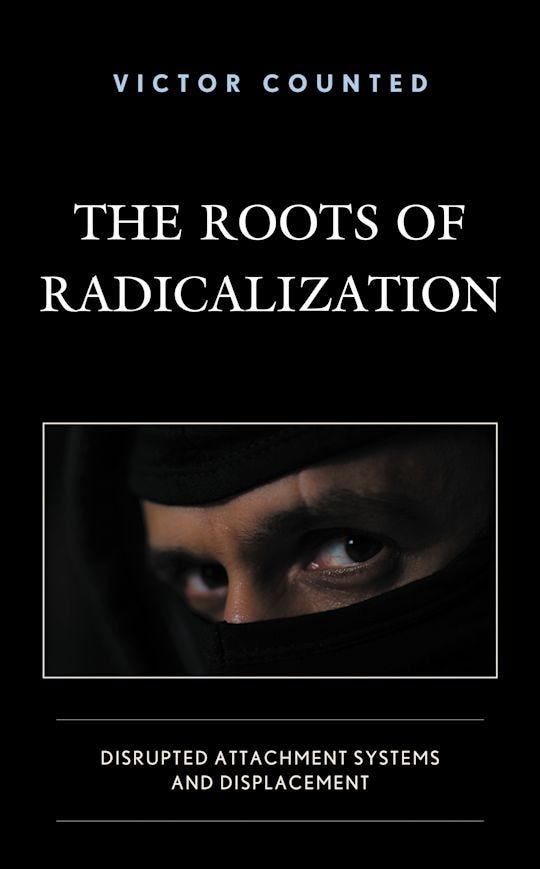
The first response is Protest. It is a primal, “sacred grief” characterized by lament and resistance. We see it in the frantic efforts to salvage icons from ruins or the fierce activism of those defending a threatened homeland. It is the soul’s desperate attempt to re-establish proximity to its anchor.
But when the loss becomes irreversible, protest curdles into Despair. This is a state of spiritual numbness and identity fragmentation. It can also be a violent state of vigilantism. The narrative of the self begins to unravel because the “home” of the story is gone—the attachment connection is lost. In this stage, the individual begins to ask the most dangerous question a human can ask: If my place is gone, and the God I met there is silent, do I actually exist?
The final stage is Detachment. To survive the agony of the void, the heart goes cold. This is the stage of the “hollowed-out self.” But the human psyche abhors a vacuum. A detached soul is a soul in search of an emergency anchor—any anchor—to stop the drift. But there is hope at the detachment phase.
Radicalization as Emergency Re-Mooring
The slide toward extremism is rarely about an abundance of belief. To some degree, it is almost always about a vacuum of belonging.
When a young person is unmoored from a stable family (relational), a meaningful homeland (spatial), and a loving religious figure (sacred), they become uniquely susceptible to “identity predators.” Extremist movements, whether political or religious, offer a “counter-anchor.” They provide a rigid binary sense of belonging and a territory—real or imagined—to defend.
Radicalization is, in essence, a desperate, pathological attempt at “emergency re-mooring.” If we do not provide people with stable anchors of hope, they will inevitably lash themselves to anchors of hate.
The Work of Sacred Repair
If we are to navigate this era of global instability, our interventions must move beyond the material. We must become architects of Sacred Repair. This is why I wrote Bonding with God to help people heal their fractured connections via a healthy sacred relationship.

Regardless, the work of repair or recovery requires a multi-dimensional approach to “re-mooring.” We must prioritize “relational re-mooring” through corrective mentoring and relationships that heal attachment injuries. We must embrace “spatial re-mooring” by recognizing that the preservation of sacred geography is a human rights imperative. And finally, we must foster “sacred re-mooring”—theological frameworks that allow for a “portable sacred,” a faith that can survive exile and displacement. I described this in my new book as The Caregiving Faith.
The choice before us is clear. We can continue to watch as the world’s population drifts further into the cold waters of detachment, or we can begin the intentional work of dropping new anchors. We must build a world where the sacred is a place where every soul has a right to stand, to be known, and to flourish.
The anchors are dragging and it is time to pull them in.