

The Invisible Casualty of Operation Epic Fury
The great unmooring is coming
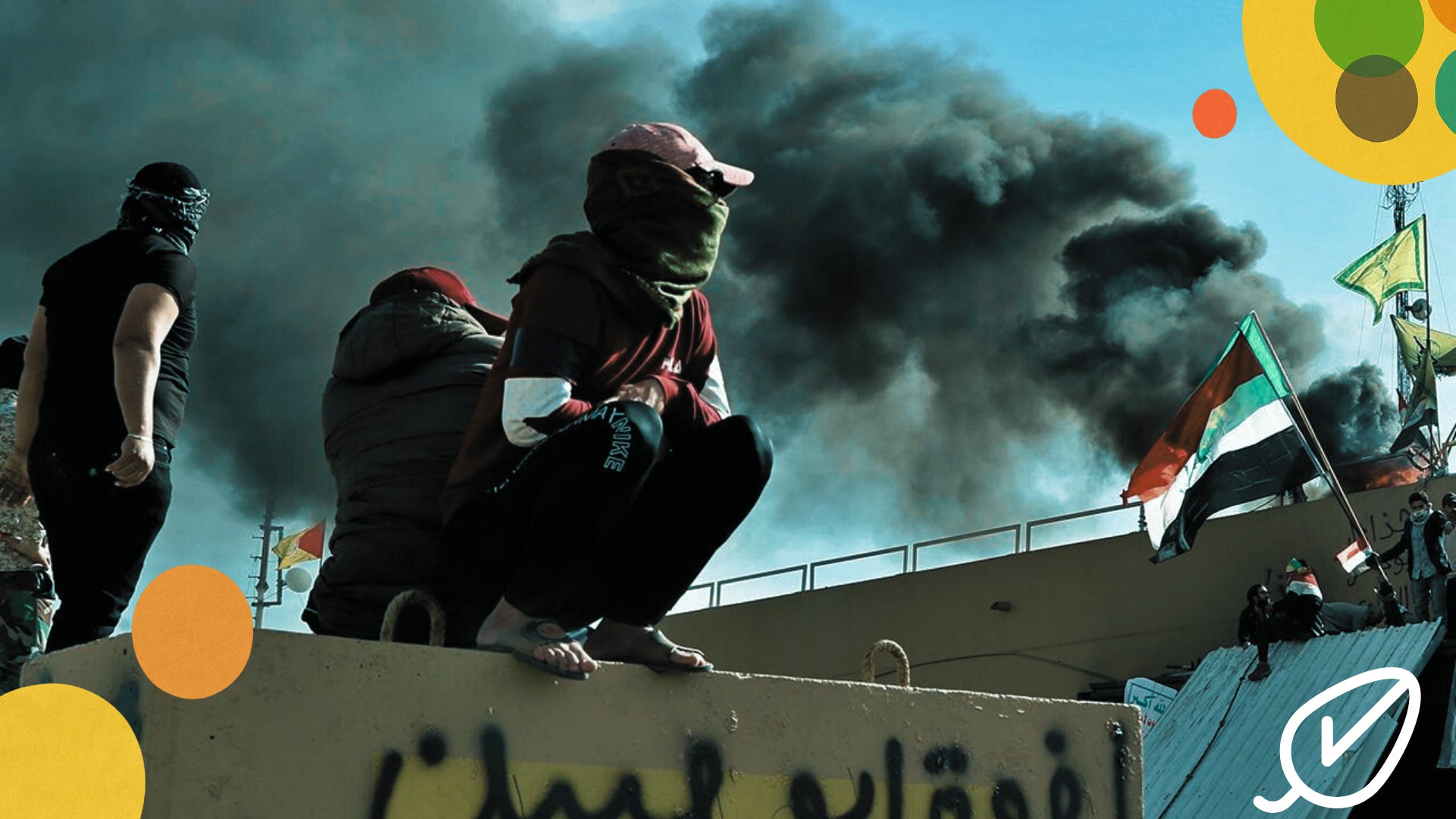
As the first salvos of “Operation Epic Fury” illuminated the skies over Tehran, Kermanshah, and Isfahan this morning, the world watched the flickering screens of its smartphones with a familiar sickening dread. We are counting the sorties. We are tracking the ballistic trajectories toward Al Udeid and the U.S. Fifth Fleet in Bahrain. We are measuring the spike in Brent Crude as the Strait of Hormuz transforms into a theater of kinetic ruin.
But while the Pentagon and the Kremlin calculate the “hard power” costs of this escalation, they are missing the more permanent, more dangerous catastrophe unfolding beneath the surface. We are witnessing The Great Unmooring.
In my work on the psychology of radicalization, I have tracked a phenomenon I call the “Unmooring Effect” in my book The Roots of Radicalization. It is the process by which individuals and entire societies lose the “anchors”—spatial, relational, and spiritual—that tether them to a stable reality. When these anchors are severed, people drift. And in that drift, they become vulnerable to the most radical forces of our age.
Today’s escalation is not merely a war of borders; it is a global factory for mass unmooring.
The three anchors that are at risk
To understand the stakes of this war, we must understand what keeps a human being stable. We are moored by three primary tethers:
The Spatial Anchor. This is our connection to place, home, and geography.
The Relational Anchor. Our trust in the communities and international orders that protect us.
The Narrative Anchor. The story we tell ourselves about our future and our purpose.
By noon today, Operation Epic Fury had systematically severed all three. When a missile strikes a residential block in Tehran or a logistics hub in Kuwait, it doesn’t just destroy infrastructure; it destroys “spatial hope.” The physical world is no longer a site of safety. When the Geneva talks collapsed last week, the “relational anchor” of global diplomacy snapped.
We are now entering what I term “The Drift.”
The Unmooring Effect
When a population is unmoored, they move through three predictable, devastating stages.
First comes the Grief, or the “Protest” phase. We are seeing this now in the streets of world capitals—a primal desperate scream against the loss of the world as we knew it. But as the war drags into its second and third weeks, this will give way to Existential Disorientation, or “Despair.” This is the silence that follows the scream. It is the spiritual and psychological numbness that occurs when a person realizes their “anchors” are gone and they are floating in an unpredictable void.
The final stage is Detachment, where the unmoored individual becomes a “free radical,” no longer invested in the survival of a society that failed to keep them tethered.
The Danger Ahead
The great irony of the U.S.-Iran escalation is that while it seeks to “stabilize” the region through force, it is creating the very conditions for ultimate instability.
My research shows that a human being cannot stay unmoored for long. The vacuum of the “Drift” is too painful to endure. Driven by the need for certainty, unmoored people will reach for the nearest “Emergency Anchor.”
History teaches us that these anchors are rarely moderate. When you strip a young person in the Middle East—or a displaced worker in the West feeling the economic ripples of this war—of their home, their safety, and their future, they will “re-moor” themselves to the first thing that offers a sense of belonging: extremist ideologies, radical nationalism, or the rigid certainty of a cult.
When millions of people around the world are unmoored, then we are not winning a war (actually there is nothing to win here); we are recruiting an army for the next one.
Beyond the Fog of War
The headlines tomorrow will focus on “regime change” and “deterrence.” But the true metric of success in the 21st century cannot be measured in craters. It must be measured in anchors.
If we want to prevent a global descent into chaos, our objective must shift from kinetic dominance to Relational Restoration. We must ask: How do we re-moor a population that has lost its sense of place? How do we provide “Spatial Hope” to those whose neighborhoods have become battlefields?
We are at a crossroads. We can continue the military logic of Operation Epic Fury and watch as the world drifts into a fragmented, radicalized future. Or, we can recognize that the most powerful weapon in any arsenal is not a missile, but a stable connection to a peaceful reality.
The bombs have already fallen. The unmooring has begun. The only question that remains is “what will we offer the world to hold onto before it drifts away entirely?”