Why Attachment Theory Can Help A Spiritually Hungry Generation Find God
All around us, people are searching for God again. Many are tired, confused, and unsure what to believe. They scroll through endless arguments online, watch churches divide over politics, and see leaders they once trusted fall.
As we look toward 2026, this season already feels like a year of spiritual yearning. A quiet hunger is rising -- especially among young people -- to find something real and trustworthy to hold on to. Many want a faith that feels honest and not hypocritical. They are asking questions that come from their pain: Where is God when the world feels cruel? Why do hate and fear speak louder than love? Why do so many who claim Christ defend hate instead of lead with love? The tense political climate has left hearts weary. People have seen how power, wealth, and fame can pollute or vanish overnight. When these things fail to give meaning, the soul turns to something greater. Even moments of public grief, such as the recent death of Charlie Kirk, have reminded many that life is fragile and that hope must rest on more than identity or influence.

Many Christians feel this same ache. Some say they are ‘deconstructing’. Others live with church hurt, unanswered prayer, or a sense that God feels far away. These experiences often sound like doubts about belief, but beneath them lies something more personal, and that is the pain of lost closeness with God. Faith was never just about agreeing with ideas. It is about a relationship. It is the bond of trust and love between God and His people. Scripture gives simple relational images for this bond: God is our refuge and strength (Psalm 46:1). Jesus is the Good Shepherd who knows His sheep (John 10:14). The Spirit helps us cry out to God as our Father (Romans 8:15). Faith means learning to rest in God’s caregiving character and living ‘abundantly’ in His presence, even when everything feels uncertain.
Psychology helps explain why this bond matters. Attachment science, which is the study of how people form and keep enduring ties, shows that humans are made for relationships. We reach out for someone safe when we are threatened. Believers do the same with God, seeking Him as a divine attachment figure who is steady and near. Two main hypotheses describe how this happens. The correspondence hypothesis suggests that people often turn to God the way they have learned to relate to others; those with secure human bonds tend to experience God as loving and trustworthy and vice versa. The compensation hypothesis offers hope for the wounded: when human attachments fail, people can tend to find healing by seeking a new relationship with God. These ideas show how our relationships with God can both mirror and mend our human relationships.
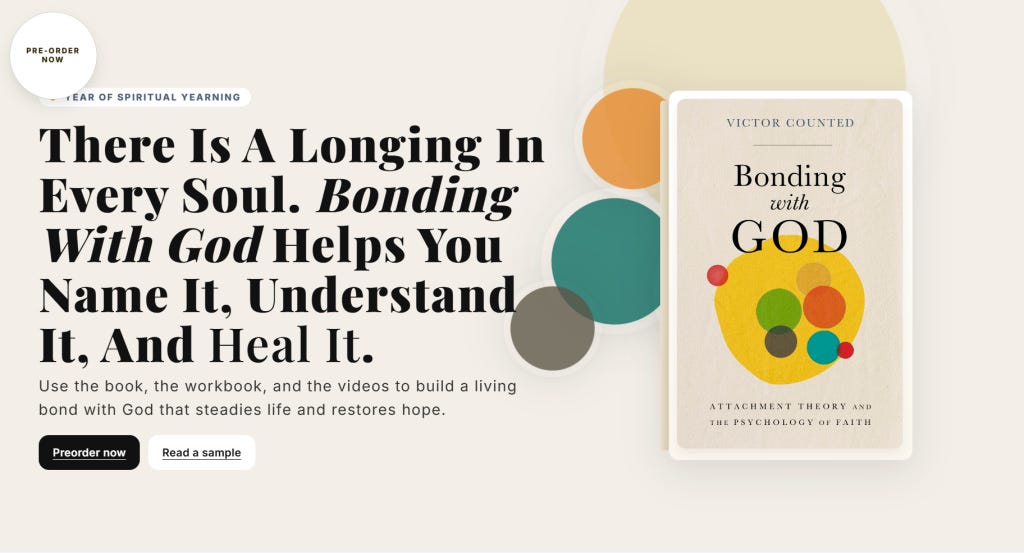
My book Bonding With God (Baker Academic) explores these truths in depth. But in this piece, I want to show how this way of seeing faith, as a living bond, can help the church guide and feed a spiritually hungry generation that is longing to find their way back to Him.
The Biblical Picture of Attachment
The Bible begins with an image of God who draws near to His creation. He walks in the garden. He speaks. He calls people by name. Faith is not only belief. Faith is a bond with a living God.
Scripture makes it clear that “God is our refuge and strength” (Psalm 46:1). Refuge means a safe place. Strength means help that does not fail. God is both. He is near in trouble. He is steady when we are weak.
Jesus calls himself the Good Shepherd (John 10:11–15). A shepherd knows his sheep. He sees their fear. He guides them to rest. He protects them from harm. He lays down his life for them.

God also promises to stay. “He will never leave you or forsake you” (Deut. 31:6). The book of Hebrews repeats the same promise for the church (Heb. 13:5). God’s closeness is not a mood. It is a covenant word. It is a pledge that holds when our feelings shift.
These images are rich with attachment meaning. Refuge speaks of a safe haven. Shepherd speaks of trusted guidance. The promise to never leave speaks of a secure bond. The Bible gives these pictures before psychology had names for them. The church has long prayed, sung, and lived from them.
We see this pattern across the story of God. He draws near to Abraham and Sarah. He speaks to Moses from a bush and a cloud. He shelters David in caves and crowns. He sends prophets to remind the people of his love. Then he comes in Christ. God with us. God for us. God within us by the Spirit.
The Spirit is called the Comforter. Comfort means strength beside us. The church is called a body and a household. These are family words. They teach us that belonging is part of faith. We are bonded to Christ and to one another.
My book, Bonding With God, builds on this scriptural vision. It shows how images in the Scripture match our deepest human needs. God draws near. God holds fast. This is where our journey starts as believers in relationship with a living God.
God as the Object of Our Proximity Seeking
Every person is born with the need to draw close to someone. Babies cry for their mothers. Children run to a parent after they fall. Adults reach out to a friend when they are overwhelmed. This is what we call proximity seeking in attachment theory. It is a behavorial design. We are made for closeness.
The Bible speaks this truth long before psychology gave it a name. “Draw near to God, and he will draw near to you” (James 4:8). The people of God have always turned to him in prayer, worship, and lament. When David was in distress, he cried out, “I call as my heart grows faint; lead me to the rock that is higher than I” (Psalm 61:2). David’s instinct was not to withdraw, but to seek proximity.

Jesus honored this design when he welcomed the crowds, healed the sick, and allowed children to come to him. He invited the weary to find rest in him. Each of these moments shows that God does not reject human proximity seeking. He receives it. He even commands it.
The church enacts this week by week. When believers gather on Sunday, they are not only hearing sermons or singing songs. They are acting out their innate attachment drive. They are coming near to the God who promises to be present. Prayer, Scripture reading, the Lord’s Supper -- all of these practices are habits of closeness. They train our hearts to reach for God first.
Attachment science supports that people flourish when they have a relational figure who is consistently available. Theologically, God himself is that figure. He is always available. His Spirit is always present. We are not left alone to handle stress, loss, or fear. We can turn toward him with the same instinct that turns a child toward a parent.
Bonding With God calls this the “connection” stage of faith. God is the target of our proximity seeking. He is the one we move toward in joy and in pain. Understanding this helps us see faith as a relationship and a daily turning of our hearts toward the One who draws near.
God as Refuge and Anchor
Psychologists describe two main roles of a caregiver. The first is a safe haven, that is, the place to run when life is frightening. The second is a secure base, referring to the steady foundation from which to step out into the world with courage. A child who knows a parent will welcome them back is free to explore. A child who knows they can cry for help is free to take risks.
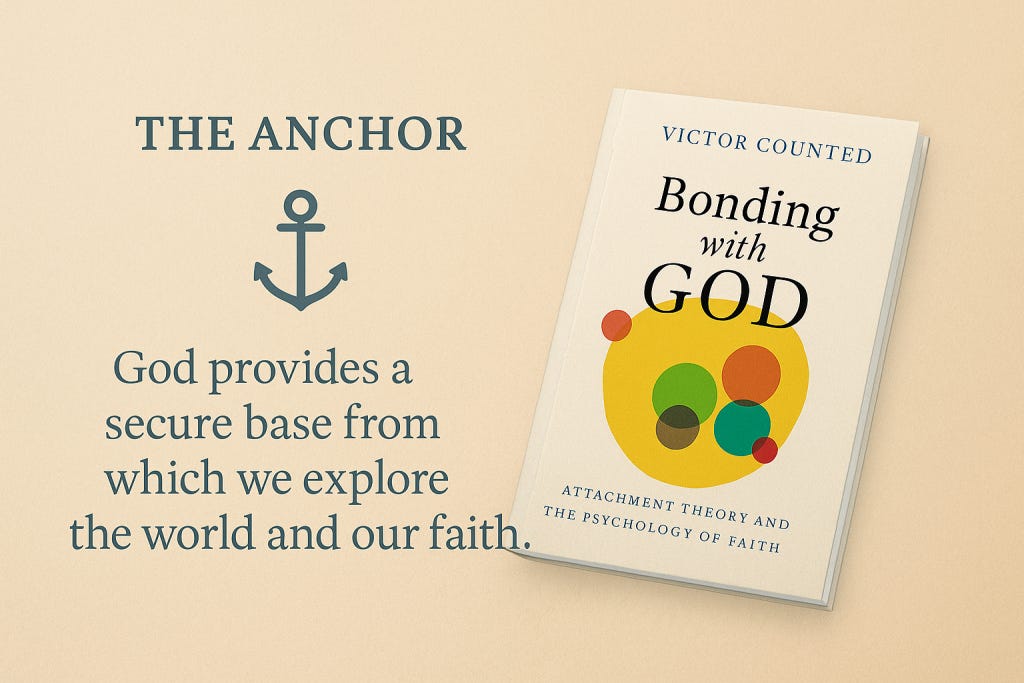
The Bible uses this very language for God. The psalmist proclaims, “You are my refuge and my fortress, my God, in whom I trust” (Psalm 91:2). God is the safe haven. He invites the weary and burdened to rest (Matt. 11:28). He is the shelter in storm, the shadow in heat, the rock in chaos. Refuge means we are not left to face life alone. Refuge means there is always a place to collapse without shame.
But God is more than shelter. He is also the anchor that steadies us to move outward. Jesus told his disciples, “As the Father has sent me, I am sending you” (John 20:21). Paul writes that in Christ we are “rooted and built up” (Col. 2:7). From the stability of God’s love, we go into mission and service. This is the secure base. It means we can risk love, risk generosity, risk witness, because we are already held.
The local church is meant to reflect both roles. At its best, it is a haven for the broken and a base for the called. When someone enters worship burdened by grief, they should find comfort. When someone leaves the gathering, they should feel sent out with strength. Ministries within a local church embody these dual gifts of God’s attachment care.
In Bonding With God, I call these roles the refuge and the anchor. They describe how believers experience God. He welcomes us when we come undone. He steadies us so we can step into the world. To understand faith this way reshapes discipleship. It reminds us that Christianity is about mission. We run to God for safety, and we rise from God with courage.
When the Bond Feels Broken
If faith is a bond and a relationship, then faith struggles are often about broken trust. Many Christians describe seasons when God feels far away. Some call it the “dark night of the soul.” Others today use the word “deconstruction.” While it can look like an intellectual crisis, at its core it is often relational.
Attachment science gives us language for this. Some believers live with an anxious attachment to God. They love him but fear he will leave. Their prayers are filled with worry that God might not hear or might withdraw. Others lean toward avoidant attachment. They keep God at a distance, relying on themselves, afraid to be vulnerable in prayer or community. Still others face attachment disruption when they are exposed to traumatic life experiences, such as abuse in church, betrayal by church leaders, unanswered cries for help. These experiences shake the sense that God is safe and near.
The Bible does not hide from these realities. The psalmist cries, “My God, my God, why have you forsaken me?” (Psalm 22:1). Job shouts his pain. Jeremiah laments. Even Jesus takes up the psalmist’s words on the cross. These voices tell us that experiencing distance from God is not faithlessness. It is part of the story of faith. It is the voice of a child searching for the parent’s presence.
In our time, many who leave the church are not simply rejecting doctrines. They are wrestling with disappointment in relationships that were meant to be safe. When leaders fail, when community wounds, when prayers seem silent, the secure base cracks. People ask: Can I still trust this God? Can I still trust his people?
Yet Scripture offers hope. God does not shame those who cry out. He welcomes lament. He meets the brokenhearted. The very act of protest, like calling on God in anger or sorrow, is itself proximity seeking. It shows that the bond, though strained, is not gone.
In Bonding With God, I call this stage the disruption and the transformation. Disruption names the separation anxiety we feel. Transformation begins when we face it honestly. This is where God does some of his deepest work in our lives. He takes our fractured attachments and begins the slow work of healing and transformation.
Healing Through Formation and Renewal
Attachment bonds can be repaired through corrective relationships. Psychologists call this “earned security.” Even if someone grew up with broken trust, new experiences of reliability and care can repair the heart. The same is true in faith. A believer who feels distant from God can learn to trust again through formation and renewal. This is when the disruption of our faith produces lasting fruit in us.
The Bible tells stories of people who went through this journey. Jacob wrestled all night and limped away with a blessing. Elijah fled in despair but found God in a gentle whisper. Peter denied Jesus, yet was restored beside a charcoal fire. Each story shows the same truth: God does not give up when bonds break. He works within the disruption to bring about a deeper faith.
I describe this path in four movements in my book Bonding with God. The struggles name the fear and distance. The transformation is the honest facing of loss. The formation is the slow shaping of identity and character in the wilderness of perceived separation with God. The renewal is the rediscovery of God as a caregiving presence who heals. These stages are not neat or quick. They mirror the ups and downs of real relationships. Real faith experience of over 100 young people I interviewed. But they show that faith, like attachment, can grow stronger after rupture.
The church plays a key role here. A healthy community offers safe relationships that rebuild trust. Small groups provide a circle of care. Pastoral guidance models humility and patience. Corporate worship rehearses God’s promises week after week. These are not side ministries. They are acts of attachment repair. They help believers experience God as both refuge and anchor again.
This healing also shapes discipleship. Faith formation is not only teaching right ideas. It is cultivating right bonds. We teach people to pray, not just to recite words, but to lean on God as safe haven. We send people into mission, not to prove themselves, but to live from the secure base of God’s love.
Renewal does not erase wounds. But it reframes them. Believers learn that even in absence, God was present. Even in silence, he was working. This discovery becomes the testimony. What once felt like abandonment becomes a stronger bond of trust. That is the promise of renewal.
A Hopeful Vision for Discipleship
Discipleship has often been treated as a program of knowledge. We memorize verses. We study doctrine. We learn church history. These are important. But if faith is at its heart a relationship with God, then discipleship must also be about cultivating secure spiritual attachment. It is not only about ideas. It is about trust, closeness, and love lived out daily.
Attachment theory helps us reimagine discipleship in this way. A disciple needs a safe haven, a place to return when they are weary or broken. This means churches must be places of comfort, not shame. People who stumble should be welcomed, not cast aside. A disciple also needs a secure base or a foundation strong enough to launch them into service and mission. This means churches must also be places of sending, equipping people to live boldly in the world.
For leaders, this means discipleship is not measured only by Bible knowledge but by relational depth in God. Are people learning to take refuge in God when life cracks open? Are they learning to rise from God with courage when the world needs their gifts? For believers, this means discipleship is moving closer to God in prayer, in worship, in community, and then moving outward with hope and service.
In my new book, I call this stage renewal. After struggles and disruption, faith can be reborn. The believer discovers that God’s love is steady. They find that the church, when healthy, can embody that steadiness. Out of that bond comes a flourishing Christian life.
A spiritually hungry generation is not looking for more arguments about God but for a faith that feels alive. True discipleship is about building trust and learning where to run when afraid and how to stand when called. Faith is more than belief; it is a living bond with the living God who draws near as refuge, shepherd, and Father. When that bond feels broken through doubt or disappointment, God does not turn away. He invites lament, welcomes questions, and stays close through His Spirit. The church’s calling is to be that same safe haven, showing the world that God still holds steady. In the end, faith endures not because we cling to God, but because He never lets go. That is the hope our anxious and searching generation needs most.
This is the hopeful vision my book Bonding With God seeks to cast. The journey of faith involves searching, struggling, and sometimes breaking. But it also involves renewal. Bonds can be healed. Trust can be restored. And the God who holds us is stronger than our grip on him.
At the end of the day, faith is not secured by how tightly we cling to God. It is secured by how faithfully he clings to us. That is the heart of the gospel. That is the bond that gives hope in an anxious age.
You can pre-order Bonding With God here.